How to Write Back to the Future part 2

bttf2

How to Write Back to the Future part 2

by L.A. Zvirbulis

1 – The Inspiration. Make a movie so popular that the studio threatens to make a sequel. I mean they offer to make a sequel with you and your buddy, but if you say no, they’ll make it anyway because it is impossible for Hollywood to not make a sequel to a movie that grossed over $100 million domestic box office. You both say ye$.

2 – The Genre. Same as the first one. Sci-fi adventure buddy comedy, but with more time travel!  So much more time travel. And while both of you come up with the story, let’s have the one with the typewriter actually write out the screenplay while the other one directs a movie about framing rabbits.

3 – The Complications. What’s the worst that could happen? Well, you have to go to the future now because of that little joke you made at the end of part one. So start with that. Then get out of it because you don’t want people writing articles about how inaccurately your movie predicted the future when the real 2015 rolls around and everyone is angry that we don’t have hoverboards or flying cars. And to make things worse, we stupidly put Jennifer in the DeLorean. Ugh, girls. Find a way to knock Jennifer unconscious for most of the movie. Also change the actress to someone more comedic. Okay now we need to get back to the past so we can get Back to the Future. But which past? Marty’s conception at Woodstock, with Marty messing up his parents having sex? No, that’s just the same movie different details. Let’s get more creative with this.

4 – The Fun Stuff. There has never been a time in Hollywood that your characters get to go into their own movie, so let’s have the most fun going back into Back to the Future. The last half of the movie takes place conveniently on the night of the famous Hill Valley lightning storm we know and love so well from part one. Doc says that the day could be important to the space time continuum, or a coincidence, but either way, you’re the writer, so you get to write whatever you want as long as you admit to your chosen conveniences. Go back into your own movie. There are now two Martys at the Enchantment Under the Sea Dance and two Docs trying to get their Martys Back to their respective Futures. Paradox. We get to recreate scenes from the first film, but to save money only change one side of the street or something. Only build what the camera can see. Thank goodness Lea Thompson saved her dress. Okay let’s figure out how we get from the future to the past.

5 – The Device. Grays. Sports. Almanac. Every sports result from 1950-2000 in one little book. This book gives Biff the power to eventually become Donald Trump. Sorry to say that name, but he is the real inspiration for the terrible Alternate 1985 casino-owning Biff, even when writing this movie in the mid 1980s. The Almanac is our MacGuffin, as it drives the plot and then is destroyed at the end. Oh and how the DeLorean time travels needs to change – we travel a lot so simplify it with Mr. Fusion and whatnot. Seriously, we go from 1985 to 2015 to Alternate 1985 to 1955 to a trailer for part 3 in 1885. It’s a lot of time travel, so the machine works for most of the film. It won’t really break again until part three.

6 – The Marty. George McFly is the protagonist of part one, meaning his character goes through a change. We don’t particularly want to work with Crispin Glover again, though, so make George hang upside down in the future or cast someone else or both. We also need a protagonist, so give Marty something personal to deal with. Ah, he’s chicken. Yeah. His insecure machismo ruins his music career, so Marty has something to learn. There is no mention of Marty’s hatred of being called a chicken in part one. We’ve gotta add it in part two, so hide the first “nobody calls me chicken” in the familiar cafe before the hoverboard chase. The audience will be too distracted by the “I remember that! It’s the same but different!” to notice that you’ve added a previously nonexistent character flaw to Marty. Sneaky.

7 – The Jokes. Same but different. Everything in 2015 is a joke of the projected culture from the mid 1980s. Advertisements for tourism to “Surf Vietnam”,  weathermen that can predict the weather, Ronald Reagan as your tv waiter in Cafe 80s, flying cars, and the abolishment of lawyers. And then, more same but different – in Alternate 1985, we need a way for Marty to wake up with his mother again, but how? “The easy way.”, meaning we just knock him unconscious. There are actually fifteen separate instances of a character getting knocked unconscious in this film, so we really do use “the easy way” quite a bit. It’s fine, as long as we call it out. Make it a joke. Laughter distracts. And then, in good ole’ 1955, even more same but different. Same movie, more of the same characters, different perspectives. Pretty cool.

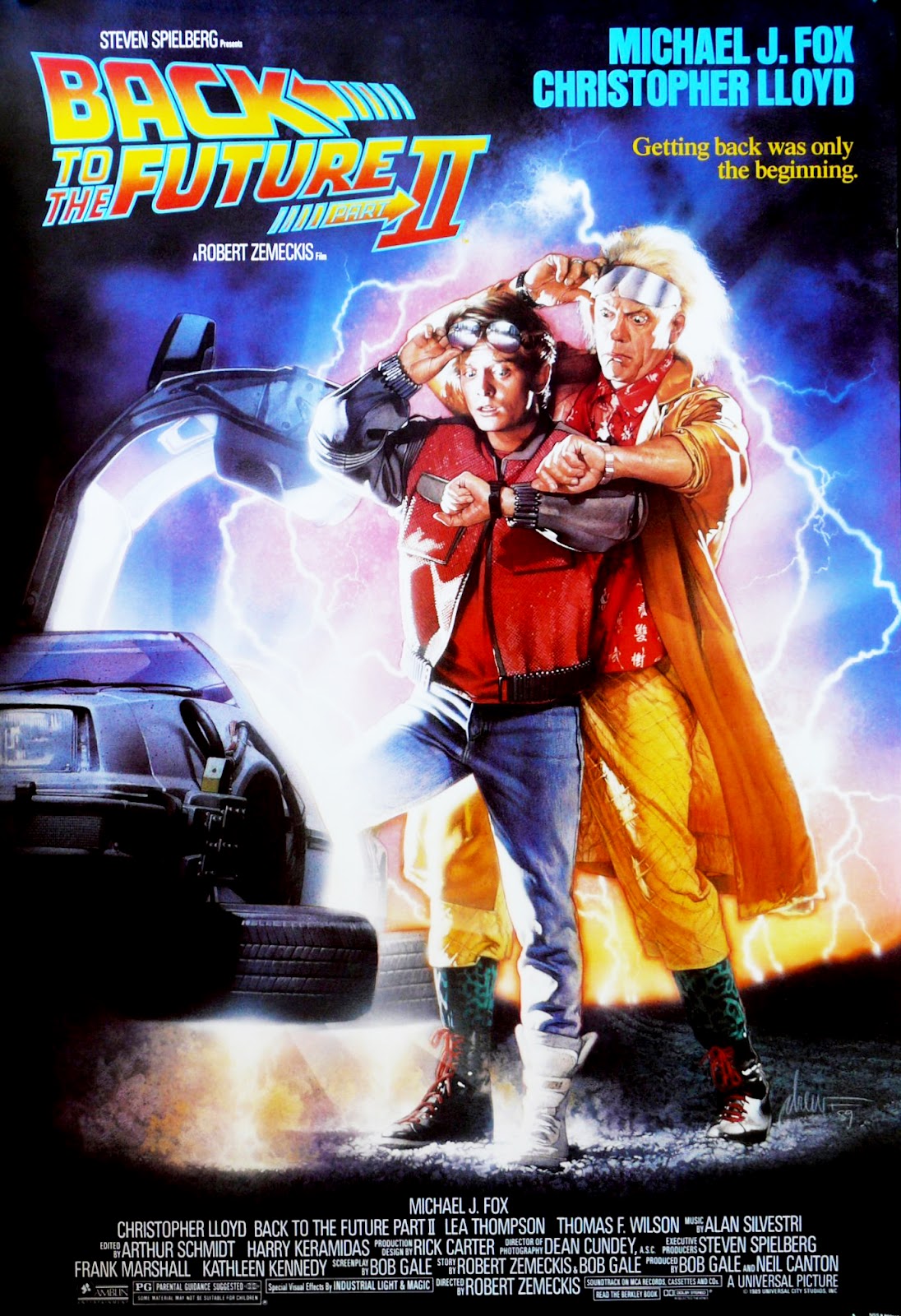
8 – The Title. Paradox. No, but that  is what we will use during filming so no one invades the set of Back to the Future part 2. Also add Doc to the poster, you know, because two people. Part two.

9 – The Ending. Part two is really just the set up for part three because we are successful movie nerds now and we want to make a Western and play with horses and trains and guns for three months. Foreshadow part three when Alternate Biff watches Clint Eastwood in A Fistful of Dollars, inspiring Marty to mimic Eastwood and defeat Buford in part three. It also lets the audience know that Marty knows that reference. Assume that no one in the audience knows your references, you movie nerd, so you must make all references self-contained within the movie, meaning it is set up before it is revealed. And now that we’ve set up the real ending in part three, let’s end part two with a lightning strike, but instead of Marty in the DeLorean, it’s Doc in the flying DeLorean – same but different, am I right? We can have fun with the Western Union guy and have 1955 Doc faint at the sight of another Marty after seeing him go Back to the Future. But really, the most important thing, as per the director’s request, is that there is a teaser for part three tagged on before the credits of part two. The audience needs to know that this story isn’t over. There is more. One more. But no more. Never any more. Trilogy forever.

10 – The Heart. Part two really builds the friendship between Doc and Marty, and the opening sequence inspires the first scene in the popular adult cartoon Rick and Morty. It also gives Marty a character flaw, and gives Doc something to hope for in discovering women. It gives two film school buddies the chance to make cinema history and go back into their own movie. Also, hoverboards.

*L.A. Zvirbulis did not write Back to the Future part 2. Bob Gale did from a story he and Robert Zemeckis developed.

How to Write Titanic

titanic

How to Write Titanic

by L.A. Zvirbulis

1 – The Inspiration. Pick a well publicized international disaster. Does not matter if multiple movies have already been made about the disaster. It just has to be a famous disaster. Become obsessed with it to a point that the only way you can fund your love of visiting the tragic site is to make a studio-financed movie about it.

2 – The Genre. Historic drama tragedy romance with a modern twist? Pretty much Romeo and Juliet, but on a real boat in 1912 for a 1997 movie audience.

3 – The Complications. What’s the worst that could happen? The disaster you picked. In this case, the boat sinks after hitting an iceberg in the North Atlantic Ocean. People die. Lots of people die. Like, rich and famous people die, as well as lots of poor people and workers trapped in the lower decks, and even some middle-class types. Also, modern-day people actually get hurt during the filming of some of the dangerous stunt scenes, but that won’t stop this sinking ship from winning a history-making eleven Oscars at the Academy Awards and won’t even stop James Cameron from quoting himself when accepting those Oscars. If you really feel like the King of the World, I guess you need to shout it to an ocean of people forced to watch you give a speech.  

4 – The Fun Stuff. Leonardo DiCaprio falls in love with Kate Winslet and then dies and falls to the bottom of the ocean after she lets him go. Like we said, this is Romeo and Juliet on a boat, so at least one of the young lovers needs to die. In this case it’s not warring families, it’s separated class systems. A rich girl and a grunt, Director Jim’s favorite thing to write about. There is a rival fiancé and a pushy parent, and an excuse to have our sexy couple do sexy stuff all over this big sexy boat. Oh I guess the sexy stuff is the fun stuff. Leo is dreamy and Kate shows her boobs.

5 – The Device. The thing that the disaster takes place on/with. In this case, the boat, Titanic. It was famous then, it was still famous when James Cameron became obsessed with it to actually visit it in real life. The entire contrived Romeo and Juliet thing is just to get teenage girls to cry and to get people interested in what is actually a history lesson of what happened on the maiden voyage of the RMS Titanic. Director Jim knew that in order to get people to care about the boat sinking, the audience had to care about the people on board the boat. It’s as if the Titanic IS Leonardo DiCaprio, sinking to the bottom of the ocean, our Boat/Romeo forever enriching the lives of those who survived. Romantic, ain’t it?

6 – The Diamond.  The Heart of the Ocean drives the plot of the modern day story. Old Rose is flown out to meet the surveyors of the Titanic sight to hopefully gain insight on the location of this valuable jeweled necklace after they find a drawing of her wearing it, boobies out. It is the MacGuffin, the thing one of the characters seeks for most of the plot, only to be tossed into the ocean in the end. Not the boobies, the necklace. But both are tied to the villain, Rose’s fiancé Billy Zane, who gives the necklace to her on the ship, probably after feeling her boobies. Why a blue diamond? James Cameron loves the color blue is all. But it also represents the ocean. Heart of the Ocean. Blue. Obviously. 

7 – The Jokes. Not so much one-off jokes as it is in the charm of the lead actors, even during the attempted suicide scene when they first meet at the butt of the ship. The comedy is in the embarrassment of spittle upon DiCaprio’s chin, or the prideful pain in Winslet’s bare ballet tippy toes on a beer-covered third class floor, or in sly comments about how Americans don’t have fleas and the third class has hardly any rats. It is 1912, after all. There are only so many jokes that existed back then and it’s important to be historically accurate. You can put a theme of playing cards throughout as a fun add-on. Have Leo win his ticket in a game of cards, give the main characters the colorful card names of Jack (black) and Rose (red). Make the mom remind Rose of how their good name is the only card they have left to play. Playing cards. Those existed in 1912.

8 – The Title. Titanic. It’s the name of the boat. Or the most famous thing about the disaster. Unless it is “too soon” and the disaster was too tragic, then name it something else, like A Night to Remember or The Unsinkable Molly Brown. Or Futility. Wait, that’s the name of the novel about an unsinkable ship that hits an iceberg mid-April called the Titan by author Morgan Robertson released fourteen years before the sinking of the real ship Titanic. Yes, before. True story. Too complicated to include in our movie, though, so just let people find that on the internet on their own. Stick to Romeo and Juliet on a boat and what really happened in 1912 and the simplest title that doesn’t disturb people. Also predict the size of profits you want to make with this film. Titanic.

9 – The Ending. The boat sinks. We knew that. We also knew that Romeo and Juliet died at the end of the story when Shakespeare tells us about it in the opening monologue of his play. It’s not about what happens, it’s about how it happens. The movie Titanic, at three hours and fifteen minutes, especially when seen on the big screen, makes you feel like you are actually on the Titanic during its real life two hour and forty minute sinking. That’s what makes teenage girls like me go see Titanic in theaters five times in three weeks. That, and Leonardo DiCaprio. That’s over sixteen paid hours of watching a boat sink. It felt real. I cried a lot.

10 – The Heart. (will go on). Romeo and Juliet, remember? A love story for the ages, but modernized with today’s hottest actors. Also, James Cameron just tricked you into sitting in a three hour history lesson. You could totally ace a test on the Titanic after watching the movie. I mean, nothing about Jack and Rose or their supporting characters is true, nor is anything that takes place in Bill Paxton’s time, but everything else is historically accurate. Director Jim studied every nook, cranny, photograph, blueprint, artifact, and human story that entered that ship, and paid tribute to it in his film, dropping fictional star-crossed lovers into the historically-accurate background. Oh yeah and there’s a great song written by James Horner for Celine Dion at the end. My Heart Will Go On. As will my love for the movie Titanic. Just looking at the poster makes me want to see it again. 

*L.A. Zvirbulis did not write Titanic. James Cameron did.

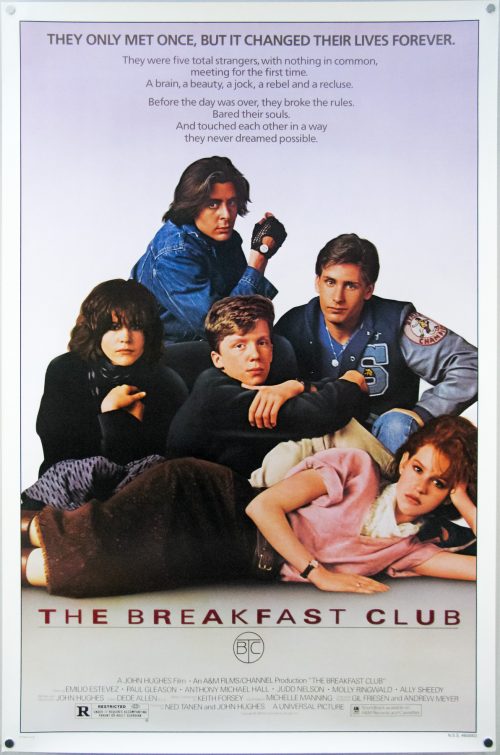
How to Write The Breakfast Club


breakfastclub.jpg

How to Write The Breakfast Club

by L.A. Zvirbulis

1 – The Inspiration. Assume that Hollywood won’t give a new director a huge budget, so come up with some story that uses only five main actors and one affordable location.   

2 – The Genre. Teenage Angst makes a lot of money because teenagers don’t know that adults  were once teenagers that can now write about that experience with a college education. It is best said by the brain named Brian – “You see us in the simplest of terms, and the most convenient definitions.” Seriously, make your main characters broad strokes of things you remembered from high school, just tell us that’s what you’re doing at the beginning.

3 – The Complications. What’s the worst that could happen? The characters are already in trouble, so getting more punishment is worse. Also not being friends after this is a huge threat. And also maybe not being able to define yourself as something more than just a brain, an athlete, a basket case, a princess, or a criminal. You can be everything, but only after making friends with the things you’re not.

4 – The Fun Stuff. Detention, am I right? Detention is so much fun. Well, misbehaving in Detention can be fun. Let’s stick it to the man. Let’s rebel. Let’s play by our own rules but still kind of play by the Principal’s and our parents’ rules because we aren’t considered adults yet and the budget doesn’t let us leave the interior of the High School. Let’s just run around this school. Add music and marijuana and some iconic poses.

5 – The Device. Bender is the device. His “Criminal” antics drive the plot, from unhinging the door to the Principal’s office to making Molly Ringwald feel uncomfortable to providing the marijuana. This would be a boring morning in detention if it weren’t for John Bender.

6 – The Principal. He’s the bad guy. “The Establishment”. The adult who hates his job but is stuck in adulthood with bills and alimony and an ill-fitting suit he bought at an outlet mall. Counterbalance him with a cool adult – the Janitor who has a shitty job but knows everything about the school and seems totally fine with going through teenage garbage.

7 – The Jokes. The Criminal isn’t the only funny person. We really do laugh when the Principal looks foolish. It’s the teenagers in all of us.

8 – The Title. The Breakfast Club sounds great. No one will notice or be bothered by the fact that the only meal that is consumed on screen is lunch. No one eats breakfast in this movie, but The Lunch Club doesn’t look good on a poster. 

9 – The Ending. These five strange teenagers learn that their differences aren’t so different. But will they be friends on Monday? Will Claire ask for her diamond earring back? Will Bender be stuck forever, frozen in time on a football field with a fist in the air?

10 – The Heart. Just read Brian’s essay. He’s the only character that writes one.

*L.A. Zvirbulis did not write The Breakfast Club. John Hughes did.

How to Write Aliens

aliensposter

How to Write Aliens

by L.A. Zvirbulis

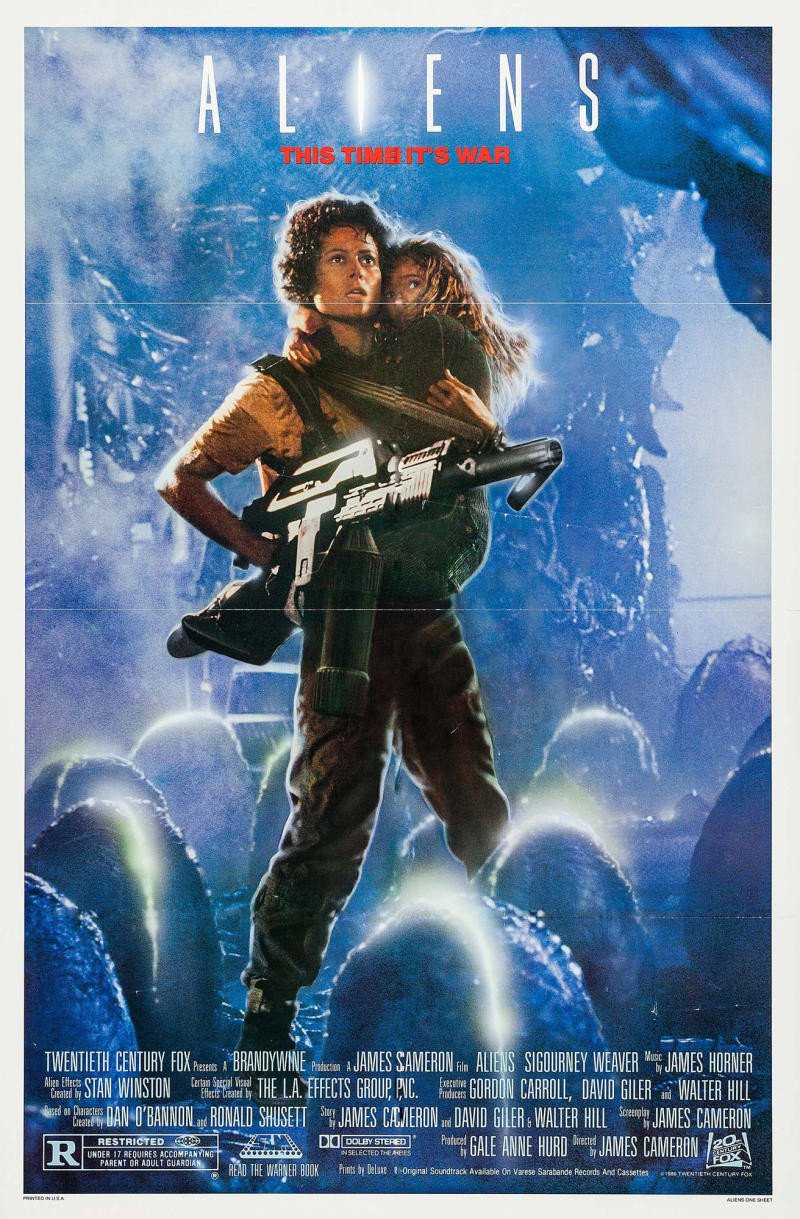
1 – The Inspiration. Watch a movie called Alien while you’re stoned. Decide to write a sequel on your own because you’ve just stopped smoking marijuana and are super focused now.

2 – The Genre. Horror but with more Action. Action-Horror. Do what the first movie did but with more characters and more aliens. Same but more, as no one in Hollywood advises. Write it at the same time you write another Action-Horror movie called “The Terminator”. People love female-led action movies in the mid-1980s. No one will notice that you kind of write the same movie over and over again. And no one will ever notice that all of the movies you write and direct start with either the letters A or T and feature the color blue.

3 – The Complications. What’s the worst that could happen? You are forced by an evil corporation to join a bunch of military grunts on a mission to find this alien you saw once so they don’t sue you for blowing up their expensive ship Nostromo from the last movie. Also you lost your biological daughter in the deleted scenes.

4 – The Fun Stuff. You know how the first movie was about men scared of having children? Let’s make Ripley adopt this awesomely tough eight year old girl named Newt, who happens to be the only survivor on the territory set up by the evil corporation. This will cause people to take their own young daughters to the movies and then inspire them to write about movies later in life. Thank you, Mom.

5 – The Device. The alien has to be scary but also be the same alien from the first film. So let’s just put more aliens in the sequel. But this time, we also get to meet the Mother alien – the one that lays all the eggs of the face huggers. A mother versus a mother? Awesome. Let’s also add flame throwers and a cool alien-tracking watch.

6 – The Ripley. Ripley is even more badass than she was in the first movie. This time, she’s a mother. This time, she knows what her villain is – it’s not the actual aliens, it’s the profit-driven evil corporation represented by that guy from 90s sitcoms. This time, Ripley’s not the only one that survives.

7 – The Jokes. Make Bill Paxton say funny things like “Game over, Man,” “We’re on the express elevator to Hell, going down,” and “Yeah, but it’s a dry heat.” He’s a grunt. Grunts make jokes. Put Bill Paxton in a lot of your movies.

8 – The Title. This is the sequel to Alien, with Sigourney Weaver reprising her original role as Ripley. So what is more than one Alien? It’s plural. Aliens. When you pitch this, use a dollar $ign as the $ in Alien$. This will also give $igourney Weaver’$ agent bargaining control to get her a big paycheck, and po$$iblly in$pire pop $star$ decade$ later.

9 – The Ending. Blow the alien out of the damned airlock, just like the first movie. Same but more, am I right? “Save the Cat” by having it not join the mission in the first place. Smart cat. Let’s make the synthetic more human in this one, and he/it helps save the kid but only after getting ripped ruthlessly in half, also paying tribute to the talking head synthetic in the original. This is also where you put the line “Get away from her, you bitch!” You can put this scene without that line in your movie Avatar.

10 – The Heart. Alien is a movie about men being scared of getting pregnant. Aliens is a movie about a mother protecting a child. Both the hero and the villain are mothers protecting what is most valuable to them. Argue what you will about James Cameron, but that strange “human” knows how to make a beautiful feminist sequel to a movie he didn’t originally write.

*L.A. Zvirbulis did not write Aliens. James Cameron did from a story by a story by James Cameron, David Giler, and Walter Hill based on characters created by Dan O’Bannon and Ronald Shusett.

How to Write Alien

alien poster

How to Write Alien

by L.A. Zvirbulis

1 – The Inspiration. Make a movie with your film school buddy John Carpenter called Dark Star that uses a spray-painted beach ball as an alien. Inspire yourself to write a movie with a realistic looking alien.

2 – The Genre. Horror. The last movie you made was a spoof comedy, so just to change it up to make this one scary. Use artwork from H.R. Giger as inspiration for the alien and the sets.

3 – The Complications. What’s the worst that could happen? You are stuck on a spaceship with a hungry alien. But how does the alien get on board the ship? Once you figure that out, the rest of this realistic alien movie will fill itself in. How about non-consensual-face-impregnation? Sorry for using that word, but that’s what happens. Now we can put a lot of sexual imagery in because a man gets impregnated after an unfortunate encounter with an alien face rapist. I mean face hugger. I mean non-consensual-face-impregnator. 

4 – The Fun Stuff. “I didn’t steal Alien from anybody. I stole it from everybody.” – Dan O’Bannon. Go ahead and take ideas from old films, like The Thing From Another World (1951), Forbidden Planet (1956), Planet of the Vampires (1965), Junkyard (1953), and Strange Relations (1960), among others. You can even pitch this as “Jaws in space”. You can tell your actors some of what’s going to happen in the chest bursting scene, but you’ll get a real reaction if they don’t know how much blood will be thrown on them during filming. Super fun.

5 – The Device. The alien has to be scary. Let’s give it acid for blood, so if you spill its acid-blood, it may burn through the walls of your spaceship and also kill you. Good defense mechanism. Let’s also give it double jaws, a mouth within a mouth. Like we said, this is Jaws in space, so it needs more jaws than that shark. Two Jaws. And of course the only way it can reproduce is by face hugging a trespassing human, growing inside that human, and then bursting out of the chest killing that human. Let’s make alien childbirth disgusting and scary to men.

6 – The Ripley. Write a badass survivor named Ripley. Make him smart. Make him always correct, so if you listened at all to Ripley’s advice there would be no movie. Make him a her. Wait what? Ripley is a lady now? Ew. Who made that decision? Oh, the director. You may write Ripley as a man in the original script but some guy named Ridley Scott will change the gender as a way to give this perfect character a flaw. Being a woman is the only thing wrong with Ripley. Being Sigourney Weaver is everything right with Ripley.   

7 – The Jokes. Kill the funniest characters off first, please. The crew is made up of working class types, so of course they have senses of humor. It gets less funny the more people are killed off, though. It’s only respectful. Also, put a cat in to ease some of the tension. People like cats. 

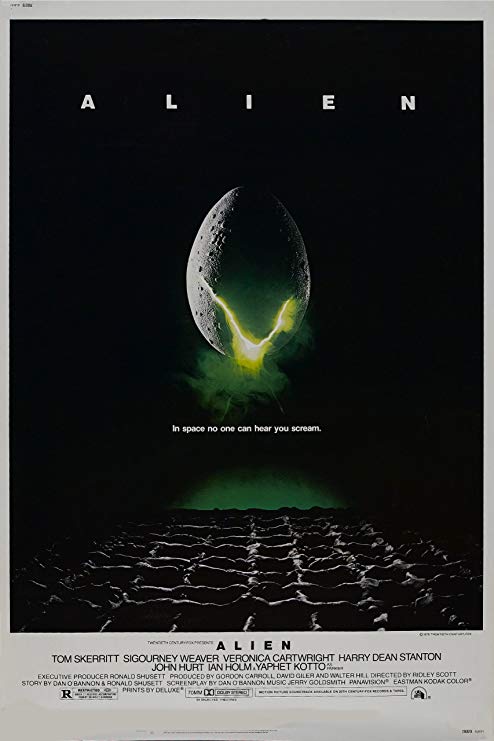
8 – The Title. While Star Beast sounds pretty scary, you use the word alien in the script a lot, and alien is both a noun and an adjective. Alien. Yeah. It will make for great opening credits. Also, even though the tagline “in space no one can hear you scream” looks great on a poster, this movie is made way after the silent era so we actually do need to hear all of the screaming.

9 – The Ending. Blow the alien out of the damned airlock, but only after Ripley blows up the huge spaceship Nostromo and takes off on the small escape ship.  Make sure the cat survives. Save the Cat, as Blake Snyder recommends in his screenwriting book. 

10 – The Heart. Alien is a movie about men being scared of getting pregnant by a realistic looking alien. It’s terrifying. And of course, the only human that survives is a woman. That’s big for 1979. 

*L.A. Zvirbulis did not write Alien. Dan O’Bannon did from a story by Dan O’Bannon and Ronald Shussett. Producers David Giler and Walter Hill add the character of Ash as an android.

How to Write Casablanca

casablanca2

How to Write Casablanca

by L.A. Zvirbulis

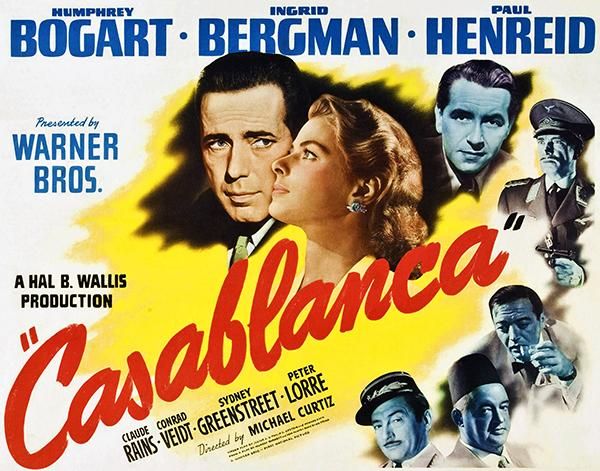
1 – The Inspiration. Visit war-torn Europe and write a stage play called “Everybody Comes to Rick’s” with your platonic lady friend, but don’t actually perform it. Just make sure movie producers read it around the same time that Pearl Harbor is bombed, because being “current on pop culture” will totally make Hollywood pay more for an unknown script than ever before.

2 – The Genre. Romance. Drama. Romantic Drama? We’re using black and white film and Humphrey Bogart, so also kind of film noir? Even more romantic and dramatic. And there’s a backdrop of the currently happening World War II, so we have to use existing sets on the studio lot if that’s cool with you. Our extra money is being used for propaganda** films.

3 – The Complications. What’s the worst that could happen? Nazis. Like I said before, they’re bad. Really bad. Like actually killing people in real life bad and in the movie they’ll shoot you if you don’t have the Letters of Transit and leave Casablanca bad. Also, just because you wrote the play doesn’t mean you get to write the movie, kids. It’s as if the original writers had to send the scripted love of their lives on a plane to Hollywood with another man-writer (or three), knowing all along how happy they could have been together, but also knowing the movie probably wouldn’t be as good if it didn’t happen this way. Problems of two little playwrights don’t amount to a hill of beans in this crazy tinsel town. 

4 – The Fun Stuff. Romance. Drama. Nazis. Alcoholism. Murder. Gambling. Corrupt Officials. Implying sex but not actually showing it because of the Hays Code. You know, all the fun stuff.

5 – The Device. These damn Letters of Transit better mean something. Wait, the official doesn’t even check for them at the end? Why the hell does Ilsa sleep with Rick to get them? Oh, she may actually still love him. That’s sweet. Let’s not tell Ingrid Bergman the ending yet, though. We actually don’t know for ourselves at this point. Just that the Letters of Transit are used to drive the plot for most of the movie and then not needed at the end. Who gets on the plane? Do we know that? There’s a plane. And there’s problems. More than three people have problems in this story, but we mainly focus on the three lovers and those meaningless Letters of Transit.

6 – The Lover. Rick’s villain is a hero who saves people from Nazis. But Rick doesn’t care about Nazis, he only cares about drinking away the love of his life Ilsa who left him in Paris for this stupid war resistance fighter. We also have the rights to the song “As Time Goes By”. It will be famous, but “Play It Again, Sam” is not a line in this movie, as a future tortured comedian would have you believe. The quotes about the song in Casablanca are “Play it, Sam, play As Time Goes By” from Ilsa and “Sam, I told you never to play…” from Rick. But the quotes get better.

7 – The Jokes. Nobody tells you how funny Casablanca is. That. Stops. Now. Casablanca is funny. Just because there is romance and drama and Nazis doesn’t mean there can’t be jokes. Humor. Funny lines people remember forever. The line the corrupt official says after blatantly seeing Rick shoot someone, “Round up The Usual Suspects,” inspires a title for a future film. Not sure which one, though. Probably Pixar’s Up.

8 – The Title. Casablanca is a city in Morocco. Promotes tourism. “We’ll Always Have Paris” also promotes tourism, but the shorter the title the better and I’m sure the French will just use that quote anyway, along with any couple who has ever implied sex in that city. 

9 – The Ending. Don’t worry, you don’t have to write the last line of this movie. “Louis, I think this is the beginning of a beautiful friendship” will be added per the producer’s request and dubbed weeks after filming. Phew. Also Ilsa gets on the plane with that damn war hero. Spoiler. But we have to hurry up to finish this movie because Casablanca will be released early to coincide with the Allied invasion of North Africa and the capture of the for real Casablanca. Gotta stay on the trends of pop culture.

10 – The Heart.  No one expected this movie to be special. Casablanca is a movie about lovers torn apart by war, and it was made during that war with some of the best talent in Hollywood. Its heart was true then, but its truths stand the test of time. It will still be the same old story, the fight for love and glory…

*L.A. Zvirbulis did not write Casablanca. The film was based on the play “Everybody Comes to Rick’s” by Murray Burnett and Joan Alison, and the screenplay was written by Julius J. Epstein, Philip G. Epstein, and Howard Koch.

**Here’s a link to one of those “let’s join America in the war effort” movies. https://www.youtube.com/watch?v=KsBG34TSJJ4