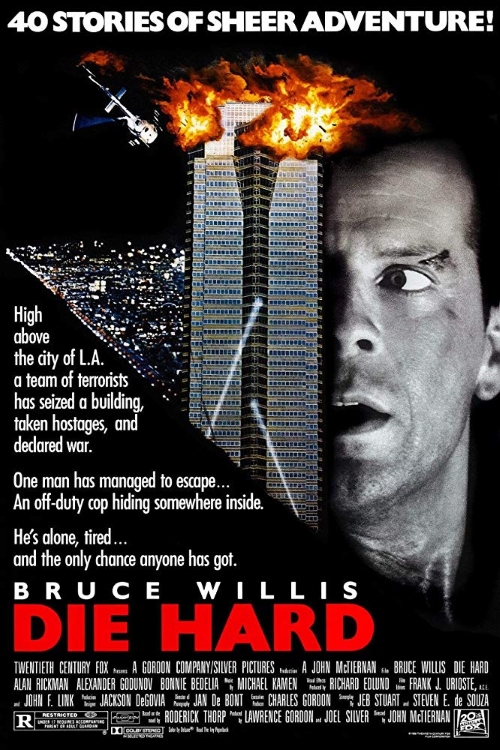
How to Write Die Hard

die hard

How to Write Die Hard

by L.A. Zvirbulis

1 – The Inspiration. Read a book called Nothing Lasts Forever that was written after the novelist had a dream after watching the movie Towering Inferno, which itself was based on two different books based on true stories about skyscrapers on fire. Nothing is original.

2 – The Genre. Action Thriller. There are terrorists and Bruce Willis and it’s 1988 so, duh. Wait, Bruce Willis, that funny guy from the tv show Moonlighting? Let’s try some proven action movie stars first, eh? How about Arnold Schwarzenegger? Oh, he wants to do comedy now as Danny DeVito’s twin brother. Fine. With no Arnold, and no chance of this being a loose Commando sequel even though we have the same writer, we can offer this super sexy action role to Richard Gere, Clint Eastwood, Burt Reynolds, Sylvester Stallone, Harrison Ford, Nick Nolte, and Mel Gibson. They all say no? Legally, we do have to offer this to Frank Sinatra because Die Hard is technically a sequel to a film he made twenty years ago but he’s old now and says no. Fine. Go with that guy from Moonlighting. What’s his name? Bruce Willis.

3 – The Complications. What’s the worst that could happen? Terrorists take your wife hostage the night you try to win her back. The terrorists don’t like you very much, because turns out, you happen to be their biggest complication. Also Bruce Willis chose his cop life over his wife’s fancy corporate career and didn’t follow her across the country because he needs to show her how good of a cop he is but now she goes by her maiden name 3,000 miles away, so, it’s complicated.

4 – The Fun Stuff.  Let’s put Bruce Willis through Hell. First of all, don’t give him shoes – make him barefoot for most of the movie. And let’s only give him an undershirt that starts as a white tank top and is so covered in sweat, blood, and fallout from all of the gunblasts and explosions that it is black by the end. Also remember that Dying Hard doesn’t just mean physical life, it can also mean not letting a relationship die. One could argue that the wife needs to see how hard Bruce Willis loves her – like making him walk over glass barefoot, falling out of buildings and then jumping back into them, and watching her get hit on by a creep. Oh and make sure to film the most dangerous stunt first, because if Bruce Willis gets hurt, it is cheaper to replace him as an actor at the beginning of filming than it is to re-film the entire movie if he gets hurt at the end and we don’t have all the footage we need. Good thing he didn’t get hurt that first day! Right, Bruce? We only have your best interest at heart.

5 – The Device. Terrorists! It’s the 1980s, after all, so terrorists are an easy villain, both for Hollywood screenwriters and the Reagan administration. The biggest terrorist is Hans Gruber, played by Alan Rickman in his first film role. We don’t want to get political on this movie, so give the terrorists some selfish financial reasons for the attack instead of political ones, making them just plain thieves instead of terrorists. Also not to get political, but one of the offices used for filming the movie becomes a real life office for post-Presidency Ronald Reagan.

6 – The Cops. Bruce Willis needs some friends on the ground, and his connection to the cop is what saves the day. Family Matters. That’s where we know that actor from, the hit show Family Matters, or really any of the other movies and tv shows that Reginald VelJohnson plays a cop – there are dozens. But the other cops on the scene aren’t the biggest fans of Bruce Willis, maybe from his singing career, so they don’t want him negotiating with the terrorists and would rather sacrifice their own officers.

7 – The Jokes.  Yippie kai-yay, joke writers, because Bruce Willis is now a sex symbol! Have fun with the lines because we need scenes that will be good memes twenty some years later when we need to promote the blu-ray when blu-rays are still a thing and we decide to reboot this franchise with Justin Long from those computer commercials. 

8 – The Title. Die Hard. While the book title “Nothing Lasts Forever” sounds like a James Bond movie, we need something simple that gets dudes pumped. Die. Sure, but how? Die HARD. Yeah. What about the female demographic, you ask? It’s the 1980s. The only women who go to movie theaters are on dates with men who pay to see action stars topless and sweaty.

9 – The Ending. Bruce Willis doesn’t die, so the title is kind of misleading. It’s like sure, I expected it to be difficult, but it does say Die Hard, not Almost Die Hard. Oh, you’re saying the other people die hard? But actually all of the people that die in this movie die pretty easily. It’s the people that stay alive that death hasn’t gotten yet that Die Hard. An alternate title of this movie could be “If you stick with me, you’ll stay alive”, which is what Bruce Willis says directly to his then unknown villain about sixty percent through the plotline. No one says Die Hard in this movie, which goes against the first and easiest rule of all cinematic drinking games – drink when someone in the movie says the name of the movie. Doesn’t happen in Die Hard. Drink when someone dies easily and you won’t remember it tomorrow.

10 – The Heart. Christmas! Wait, what? Santa kind of comes to save the day in the form of Bruce Willis, but it’s a great way to remind your friends that Die Hard is technically a Christmas movie and a romance that could be called “Bruce Willis Gets His Wife Back on Christmas While Other People Die Pretty Easily”. Yeah, at the heart, Die Hard is about a man who just wants his wife back for Christmas. And all I want for Christmas is for you to know that…

…*L.A. Zvirbulis did not write Die Hard. Jeb Stuart and Steven E. de Souza did based on the novel Nothing Lasts Forever by Roderick Thorp.
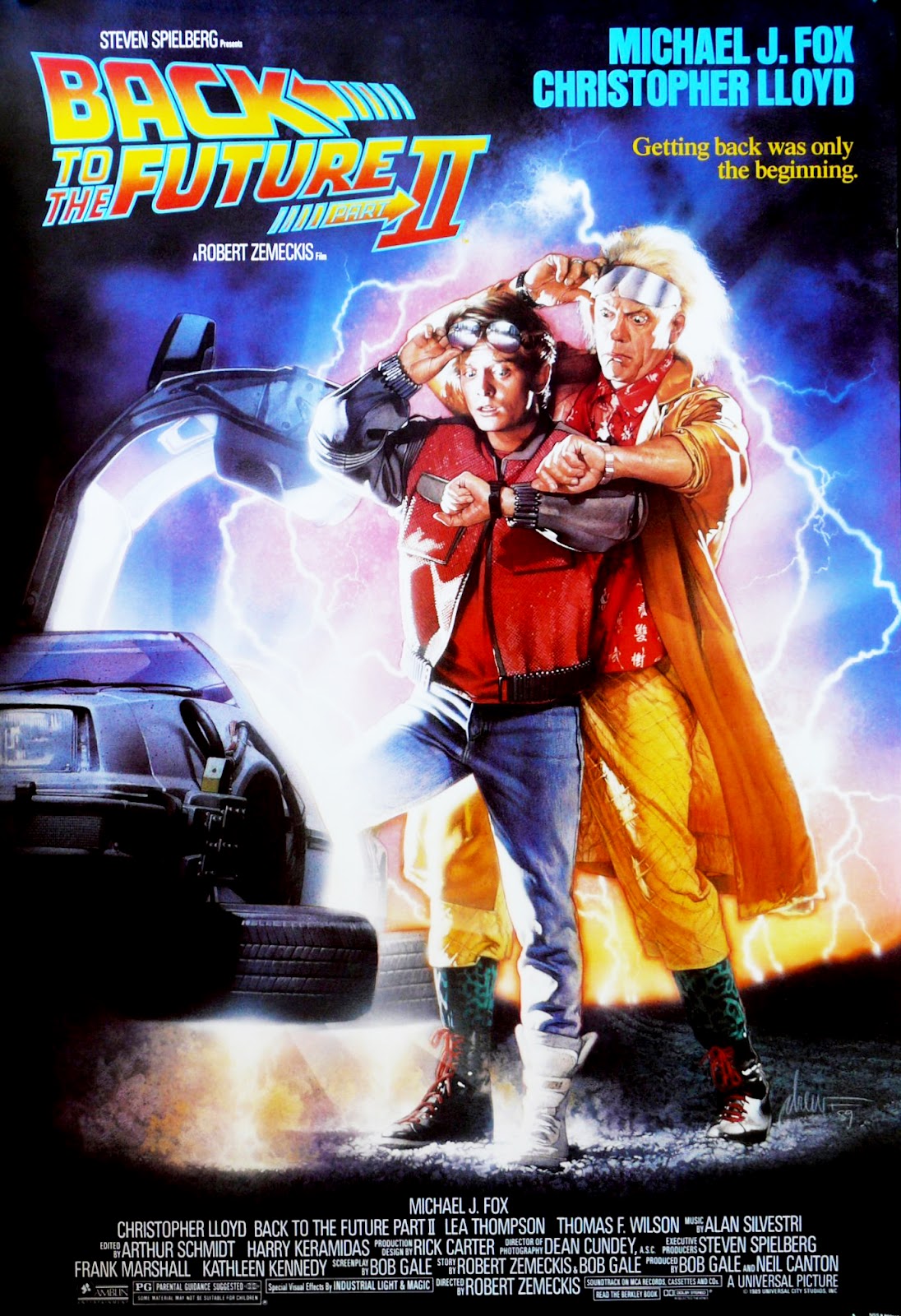
How to Write Back to the Future part 2

bttf2

How to Write Back to the Future part 2

by L.A. Zvirbulis

1 – The Inspiration. Make a movie so popular that the studio threatens to make a sequel. I mean they offer to make a sequel with you and your buddy, but if you say no, they’ll make it anyway because it is impossible for Hollywood to not make a sequel to a movie that grossed over $100 million domestic box office. You both say ye$.

2 – The Genre. Same as the first one. Sci-fi adventure buddy comedy, but with more time travel!  So much more time travel. And while both of you come up with the story, let’s have the one with the typewriter actually write out the screenplay while the other one directs a movie about framing rabbits.

3 – The Complications. What’s the worst that could happen? Well, you have to go to the future now because of that little joke you made at the end of part one. So start with that. Then get out of it because you don’t want people writing articles about how inaccurately your movie predicted the future when the real 2015 rolls around and everyone is angry that we don’t have hoverboards or flying cars. And to make things worse, we stupidly put Jennifer in the DeLorean. Ugh, girls. Find a way to knock Jennifer unconscious for most of the movie. Also change the actress to someone more comedic. Okay now we need to get back to the past so we can get Back to the Future. But which past? Marty’s conception at Woodstock, with Marty messing up his parents having sex? No, that’s just the same movie different details. Let’s get more creative with this.

4 – The Fun Stuff. There has never been a time in Hollywood that your characters get to go into their own movie, so let’s have the most fun going back into Back to the Future. The last half of the movie takes place conveniently on the night of the famous Hill Valley lightning storm we know and love so well from part one. Doc says that the day could be important to the space time continuum, or a coincidence, but either way, you’re the writer, so you get to write whatever you want as long as you admit to your chosen conveniences. Go back into your own movie. There are now two Martys at the Enchantment Under the Sea Dance and two Docs trying to get their Martys Back to their respective Futures. Paradox. We get to recreate scenes from the first film, but to save money only change one side of the street or something. Only build what the camera can see. Thank goodness Lea Thompson saved her dress. Okay let’s figure out how we get from the future to the past.

5 – The Device. Grays. Sports. Almanac. Every sports result from 1950-2000 in one little book. This book gives Biff the power to eventually become Donald Trump. Sorry to say that name, but he is the real inspiration for the terrible Alternate 1985 casino-owning Biff, even when writing this movie in the mid 1980s. The Almanac is our MacGuffin, as it drives the plot and then is destroyed at the end. Oh and how the DeLorean time travels needs to change – we travel a lot so simplify it with Mr. Fusion and whatnot. Seriously, we go from 1985 to 2015 to Alternate 1985 to 1955 to a trailer for part 3 in 1885. It’s a lot of time travel, so the machine works for most of the film. It won’t really break again until part three.

6 – The Marty. George McFly is the protagonist of part one, meaning his character goes through a change. We don’t particularly want to work with Crispin Glover again, though, so make George hang upside down in the future or cast someone else or both. We also need a protagonist, so give Marty something personal to deal with. Ah, he’s chicken. Yeah. His insecure machismo ruins his music career, so Marty has something to learn. There is no mention of Marty’s hatred of being called a chicken in part one. We’ve gotta add it in part two, so hide the first “nobody calls me chicken” in the familiar cafe before the hoverboard chase. The audience will be too distracted by the “I remember that! It’s the same but different!” to notice that you’ve added a previously nonexistent character flaw to Marty. Sneaky.

7 – The Jokes. Same but different. Everything in 2015 is a joke of the projected culture from the mid 1980s. Advertisements for tourism to “Surf Vietnam”,  weathermen that can predict the weather, Ronald Reagan as your tv waiter in Cafe 80s, flying cars, and the abolishment of lawyers. And then, more same but different – in Alternate 1985, we need a way for Marty to wake up with his mother again, but how? “The easy way.”, meaning we just knock him unconscious. There are actually fifteen separate instances of a character getting knocked unconscious in this film, so we really do use “the easy way” quite a bit. It’s fine, as long as we call it out. Make it a joke. Laughter distracts. And then, in good ole’ 1955, even more same but different. Same movie, more of the same characters, different perspectives. Pretty cool.

8 – The Title. Paradox. No, but that  is what we will use during filming so no one invades the set of Back to the Future part 2. Also add Doc to the poster, you know, because two people. Part two.

9 – The Ending. Part two is really just the set up for part three because we are successful movie nerds now and we want to make a Western and play with horses and trains and guns for three months. Foreshadow part three when Alternate Biff watches Clint Eastwood in A Fistful of Dollars, inspiring Marty to mimic Eastwood and defeat Buford in part three. It also lets the audience know that Marty knows that reference. Assume that no one in the audience knows your references, you movie nerd, so you must make all references self-contained within the movie, meaning it is set up before it is revealed. And now that we’ve set up the real ending in part three, let’s end part two with a lightning strike, but instead of Marty in the DeLorean, it’s Doc in the flying DeLorean – same but different, am I right? We can have fun with the Western Union guy and have 1955 Doc faint at the sight of another Marty after seeing him go Back to the Future. But really, the most important thing, as per the director’s request, is that there is a teaser for part three tagged on before the credits of part two. The audience needs to know that this story isn’t over. There is more. One more. But no more. Never any more. Trilogy forever.

10 – The Heart. Part two really builds the friendship between Doc and Marty, and the opening sequence inspires the first scene in the popular adult cartoon Rick and Morty. It also gives Marty a character flaw, and gives Doc something to hope for in discovering women. It gives two film school buddies the chance to make cinema history and go back into their own movie. Also, hoverboards.

*L.A. Zvirbulis did not write Back to the Future part 2. Bob Gale did from a story he and Robert Zemeckis developed.