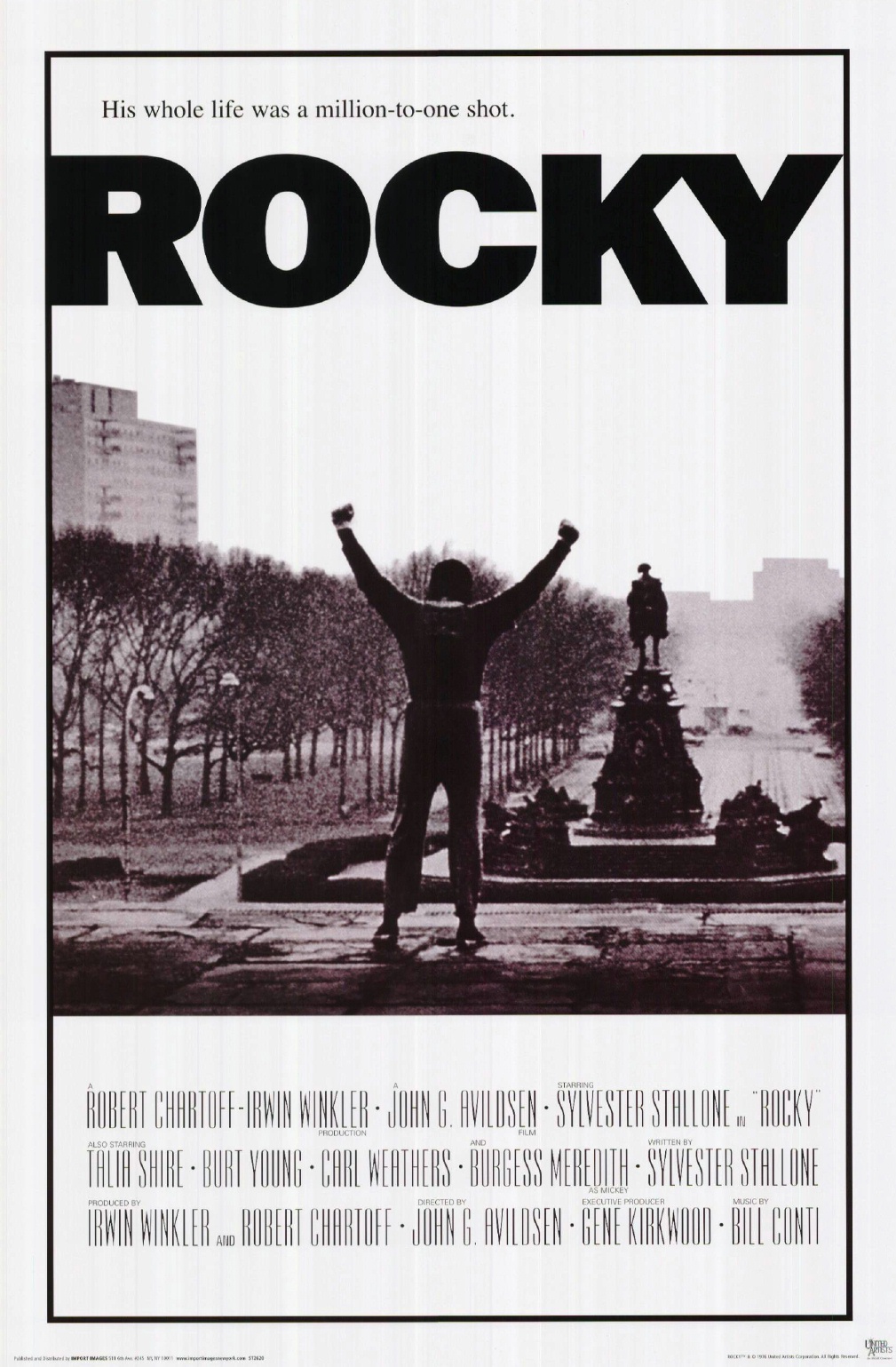
How to Write Rocky

rocky-poster

How to Write Rocky

by L.A. Zvirbulis

1 – The Inspiration. Beat yourself up for having “not made it” in Hollywood yet. Write a script in three and a half days after you sell your dog. This is not a story about a winner. It is kind of a story about boxer Chuck Wepner lasting almost a full fifteen rounds against Muhammad Ali unexpectedly in 1975. We settle with Wepner out of court for this little inspiration years later, and you do get to buy your dog back. Phew. 

2 – The Genre. Oscar bait. I mean, inspirational drama Oscar bait that gets you a bunch of awards and international recognition. I guess this is a story about a winner. Best Picture winner, to be exact. Ten nominations, Adrian!

3 – The Complications. What’s the worst that could happen? You’re a loser. A has been. A nobody. You could have been a contender. You gave up on yourself and now beat up dudes to collect money. And all you want to do in life is to get punched repeatedly by the world heavy weight champion in front of millions of television viewers and your new girlfriend Adrian. Also the studio is thinking of casting someone else, an existing star like Robert Redford or Burt Reynolds. Maybe you’ll never make it in Hollywood.

4 – The Fun Stuff. You win the role of Rocky. You would have beaten yourself up if the movie was a success without you in it, but now that you’re in it, you get to beat other people up! The most fun will be getting your butt in gear to a sweet montage. Training like a champion – specifically training like real boxer Joe Frazier – drinking raw eggs, punching dead cow carcasses in a meat locker, jogging up stairs of the Philadelphia Art Museum and making them famous with a fist pump. But we can also provide soundtracks to people working out and inspire real life people to run up those stairs while listening to that song and pumping their own fists in the air. Life imitates art, after all.

5 – The Device. World Heavyweight Champion Muhammad Ali, but in the script we call him Apollo Creed. He’s the best, regularly knocking out professional boxers. To gain some more press, Apollo hosts a mock exhibition match against a marketable Southpaw – The Italian Stallion. Apollo gives Rocky the chance to fight him, so while he is the opponent, he is also the savior. I’m not sure Jesus ever asked anyone to fight him for money, but he did provide ways for people to reach their full potentials. So. There’s that.

6 – The Coach. Rocky needs someone who believed in him once but doesn’t believe in him right now but could possibly believe in him again if he got his act together. Burgess Meredith, the guy from one of the most famous episodes of The Twilight Zone – the one where the guy is the last man alive on Earth and just wants to read, but when he finally finds the library he steps on his glasses and can’t read. He doesn’t want to read in this movie, though, he wants to train boxers. It’s just cool that we can afford an actor from The Twilight Zone. And even though we only have a million dollar budget, we can also afford a Coppola.

7 – The Jokes. “Yo, Adrian!” The charm in this movie comes from Rocky’s love for Adrian, played by Francis Ford Coppola’s sister Talia Shire. He really fights for her love by making her laugh with jokes, and then makes love to her after buying animals from her pet store.

8 – The Title. Rocky. Rocky 2. Rocky 3. Rocky 4. Rocky Balboa. Creed. Creed 2. Wow this really is a franchise. Let’s just start with Rocky.

9 – The Ending. You lose the fight, but you last all the rounds. You make it to the end and don’t get taken down by the world heavyweight champion. Sure, you loosely based the story on a real life boxing match, but that script you write in three and half days earns you an Academy Award nomination for Best Screenplay. Congrats, winner. Even though you didn’t win the Oscar for writing, you do win a career.

10 – The Heart. Rocky wins the heart of Adrian and launches Sylvester Stallone into the  hearts of viewers around the world. Sly not only stars in all of the sequels but also writes and directs most of them as well. This really is a story about a winner. And this article is to remind you that Sylvester Stallone is an Academy Award nominated Screenwriter. (Fist pump).

*L.A. Zvirbulis did not write Rocky. Sylvester Stallone did. Seriously. Rambo wrote Rocky. 
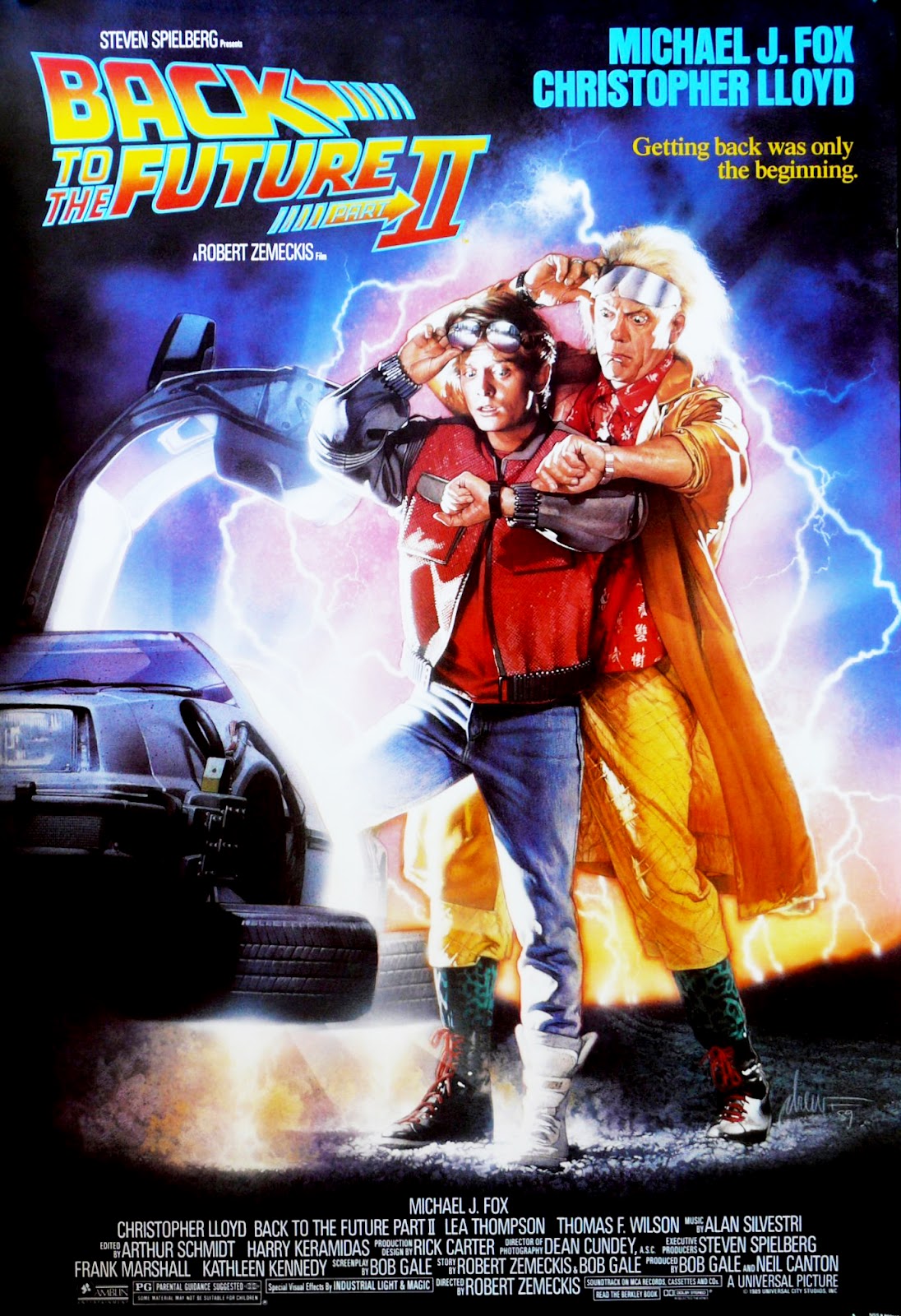
How to Write Back to the Future part 2

bttf2

How to Write Back to the Future part 2

by L.A. Zvirbulis

1 – The Inspiration. Make a movie so popular that the studio threatens to make a sequel. I mean they offer to make a sequel with you and your buddy, but if you say no, they’ll make it anyway because it is impossible for Hollywood to not make a sequel to a movie that grossed over $100 million domestic box office. You both say ye$.

2 – The Genre. Same as the first one. Sci-fi adventure buddy comedy, but with more time travel!  So much more time travel. And while both of you come up with the story, let’s have the one with the typewriter actually write out the screenplay while the other one directs a movie about framing rabbits.

3 – The Complications. What’s the worst that could happen? Well, you have to go to the future now because of that little joke you made at the end of part one. So start with that. Then get out of it because you don’t want people writing articles about how inaccurately your movie predicted the future when the real 2015 rolls around and everyone is angry that we don’t have hoverboards or flying cars. And to make things worse, we stupidly put Jennifer in the DeLorean. Ugh, girls. Find a way to knock Jennifer unconscious for most of the movie. Also change the actress to someone more comedic. Okay now we need to get back to the past so we can get Back to the Future. But which past? Marty’s conception at Woodstock, with Marty messing up his parents having sex? No, that’s just the same movie different details. Let’s get more creative with this.

4 – The Fun Stuff. There has never been a time in Hollywood that your characters get to go into their own movie, so let’s have the most fun going back into Back to the Future. The last half of the movie takes place conveniently on the night of the famous Hill Valley lightning storm we know and love so well from part one. Doc says that the day could be important to the space time continuum, or a coincidence, but either way, you’re the writer, so you get to write whatever you want as long as you admit to your chosen conveniences. Go back into your own movie. There are now two Martys at the Enchantment Under the Sea Dance and two Docs trying to get their Martys Back to their respective Futures. Paradox. We get to recreate scenes from the first film, but to save money only change one side of the street or something. Only build what the camera can see. Thank goodness Lea Thompson saved her dress. Okay let’s figure out how we get from the future to the past.

5 – The Device. Grays. Sports. Almanac. Every sports result from 1950-2000 in one little book. This book gives Biff the power to eventually become Donald Trump. Sorry to say that name, but he is the real inspiration for the terrible Alternate 1985 casino-owning Biff, even when writing this movie in the mid 1980s. The Almanac is our MacGuffin, as it drives the plot and then is destroyed at the end. Oh and how the DeLorean time travels needs to change – we travel a lot so simplify it with Mr. Fusion and whatnot. Seriously, we go from 1985 to 2015 to Alternate 1985 to 1955 to a trailer for part 3 in 1885. It’s a lot of time travel, so the machine works for most of the film. It won’t really break again until part three.

6 – The Marty. George McFly is the protagonist of part one, meaning his character goes through a change. We don’t particularly want to work with Crispin Glover again, though, so make George hang upside down in the future or cast someone else or both. We also need a protagonist, so give Marty something personal to deal with. Ah, he’s chicken. Yeah. His insecure machismo ruins his music career, so Marty has something to learn. There is no mention of Marty’s hatred of being called a chicken in part one. We’ve gotta add it in part two, so hide the first “nobody calls me chicken” in the familiar cafe before the hoverboard chase. The audience will be too distracted by the “I remember that! It’s the same but different!” to notice that you’ve added a previously nonexistent character flaw to Marty. Sneaky.

7 – The Jokes. Same but different. Everything in 2015 is a joke of the projected culture from the mid 1980s. Advertisements for tourism to “Surf Vietnam”,  weathermen that can predict the weather, Ronald Reagan as your tv waiter in Cafe 80s, flying cars, and the abolishment of lawyers. And then, more same but different – in Alternate 1985, we need a way for Marty to wake up with his mother again, but how? “The easy way.”, meaning we just knock him unconscious. There are actually fifteen separate instances of a character getting knocked unconscious in this film, so we really do use “the easy way” quite a bit. It’s fine, as long as we call it out. Make it a joke. Laughter distracts. And then, in good ole’ 1955, even more same but different. Same movie, more of the same characters, different perspectives. Pretty cool.

8 – The Title. Paradox. No, but that  is what we will use during filming so no one invades the set of Back to the Future part 2. Also add Doc to the poster, you know, because two people. Part two.

9 – The Ending. Part two is really just the set up for part three because we are successful movie nerds now and we want to make a Western and play with horses and trains and guns for three months. Foreshadow part three when Alternate Biff watches Clint Eastwood in A Fistful of Dollars, inspiring Marty to mimic Eastwood and defeat Buford in part three. It also lets the audience know that Marty knows that reference. Assume that no one in the audience knows your references, you movie nerd, so you must make all references self-contained within the movie, meaning it is set up before it is revealed. And now that we’ve set up the real ending in part three, let’s end part two with a lightning strike, but instead of Marty in the DeLorean, it’s Doc in the flying DeLorean – same but different, am I right? We can have fun with the Western Union guy and have 1955 Doc faint at the sight of another Marty after seeing him go Back to the Future. But really, the most important thing, as per the director’s request, is that there is a teaser for part three tagged on before the credits of part two. The audience needs to know that this story isn’t over. There is more. One more. But no more. Never any more. Trilogy forever.

10 – The Heart. Part two really builds the friendship between Doc and Marty, and the opening sequence inspires the first scene in the popular adult cartoon Rick and Morty. It also gives Marty a character flaw, and gives Doc something to hope for in discovering women. It gives two film school buddies the chance to make cinema history and go back into their own movie. Also, hoverboards.

*L.A. Zvirbulis did not write Back to the Future part 2. Bob Gale did from a story he and Robert Zemeckis developed.

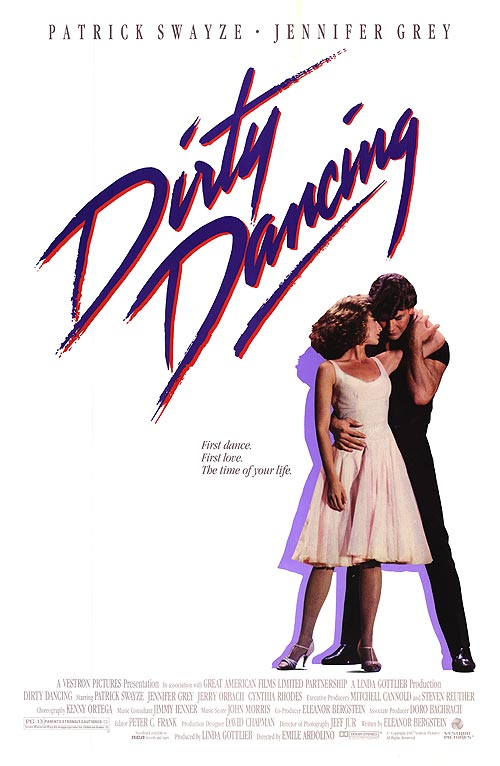
How to Write Dirty Dancing

dirty dancing

How to Write Dirty Dancing

by L.A. Zvirbulis

1 – The Inspiration. Write a movie for Michael Douglas that has a sexy dance sequence cut out by producers. Decide to write a movie that has mostly sexy dance sequences. But how? Think “Hey, my life would make a great movie”, specifically the part when you visited a vacation resort with your family in the 1960s. Just add the fantasy of a sexy dance instructor. Name the main character after the same nickname you had in real life, Baby.

2 – The Genre. Sexy dance movie. Musical romance with some period drama. Or I guess lack of period drama, because of dancer Penny being pregnant and all. Also coming of age story.

3 – The Complications. What’s the worst that could happen? No one can sexy dance when sexy dancing was expected. Also Penny wants an abortion, and Baby lies to her father for the first time. This whole story is about a father accepting his daughter growing up, so anything that could go wrong in that vein. Like the silent treatment, suddenly liking your sister more, and leaving family camp early.

4 – The Fun Stuff. Dirty Dancing. Kenny Ortega choreographs classic numbers in this movie, most famously the “lift” successfully accomplished at the end of the film. Baby learns how to dance from the sexiest of dance instructors Patrick Swayze. Also there’s sex implied.

5 – The Device. The music. In order to pitch this around, have the producer send mix tapes of the proposed soundtrack, a combination of music from the 1960s and the current 1980s. The soundtrack is classic and this pitch cassette tape will become a collector’s item. Dirty Dancing is a period film that uses both period music and modern music, and while it’s not the first to do so, it does it very well. I’m sure the rights to the music aren’t cheap, but they’re worth it.

6 – The Doctor. Baby’s relationship with her father is the real spine of this story. This Jewish Physician loves his sweet innocent daughter at the beginning, only to think she’s been corrupted by the black leather wearing Patrick Swayze. The Doc also thinks Patrick Swayze is the reason Penny needs to be fixed from a botched abortion, and changes what he thinks about Baby. In the end, when he sees Baby dance, he accepts how good Patrick Swayze is for all of our emotional growths.

7 – The Jokes. This movie is charming. It’s romantic. It’s heartwarming. “Nobody puts Baby in a corner.”, “spaghetti arms!”, and “I carried a watermelon.” are classic lines.

8 – The Title. Dirty Dancing. It gets to the point. Make sure you put the sexy dances in the opening credits and the audience will be on board from the beginning. Alliteration also adds.

9 – The Ending. Baby grows up. Family camp ends. Doctor accepts Baby as a grown woman. Patrick Swayze has more confidence in himself, but probably doesn’t ever see Baby again. Maybe a letter or two but nothing serious. Probably a meet up at a dive bar in NYC ten years later but only for one fun night. That should be the real sequel, not Havana Nights.

10 – The Heart. Baby grows up to great music with Patrick Swayze. What more could you ask for? 

*L.A. Zvirbulis did not write Dirty Dancing. Eleanor Bergstein did.